

How To Repair A Double Door
How To Fix Sagging or Sticking Doors
Set up tight doors by tightening hinges and jambs — with planing and sanding equally a last resort.
 Time
Time
An 60 minutes or less
 Complication
Beginner
 Cost
Cost
Complimentary
Introduction
Unstick your doors past doing a petty piece of work on the hinges and (if necessary) breaking out the planer.
Tools Required
Materials Required
- three-in. screws
- Varnish
- Woods filler
- Wood shims
- Wood stain
The standard prescription for fixing a sticking door is planing the rubbing edge then information technology swings freely. This always works, simply information technology's a major hassle. You have to remove the door and lug it out to the garage. When the planing is done, y'all accept to refinish the planed edge. Earlier you go to all that problem, effort the three shortcuts described here. In nigh cases one of them will cure your sticking door.
Watch this video to see how simple fixing a nuisance door can be:
Project pace-by-footstep (7)
Step 1
Fix #ane: Tighten the Swivel Screws
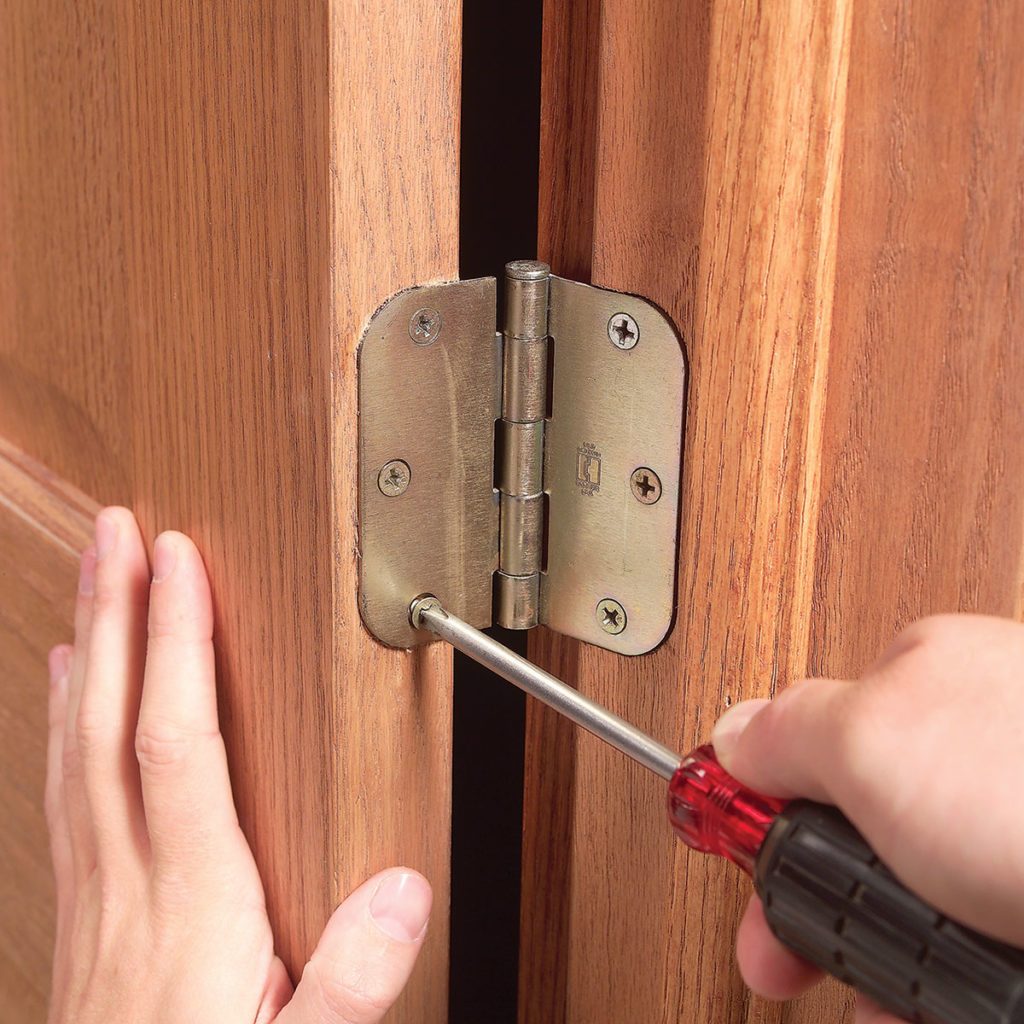
Screws magically work themselves loose over the years. If your door rubs well-nigh the top or drags on the flooring, utilise a screwdriver, not a drill, to tighten the screws. With a drill, you're more likely to over-tighten the screw and strip the spiral holes or chew upward the screwheads.
Brand Certain All the Screws are Tight
Tighten the swivel screws in the door and the jamb. Snug them firmly with a screwdriver rather than a drill to avert stripping the screw holes.
Step 2
Replace the Screw Closest to the Doorstop
To utilize this technique, remove a spiral almost the middle of the swivel (rather than the top or bottom spiral).
- Drive in a 3-in. screw with a drill.
- When the spiral is snug against the swivel, give the spiral another quarter plough with a screwdriver.
- Close the door to bank check the fit. Go on tightening and checking until the door no longer sticks.
- Pro tip: Go along an eye on the door trim as yous tighten. If you lot begin to create gaps at the trim joints, cease. Information technology'due south rare, but y'all might notice that you can't draw in a hinge at all considering the jamb is already tight against the framing or shims.


Step 3
Fix #2: Draw In the Jamb
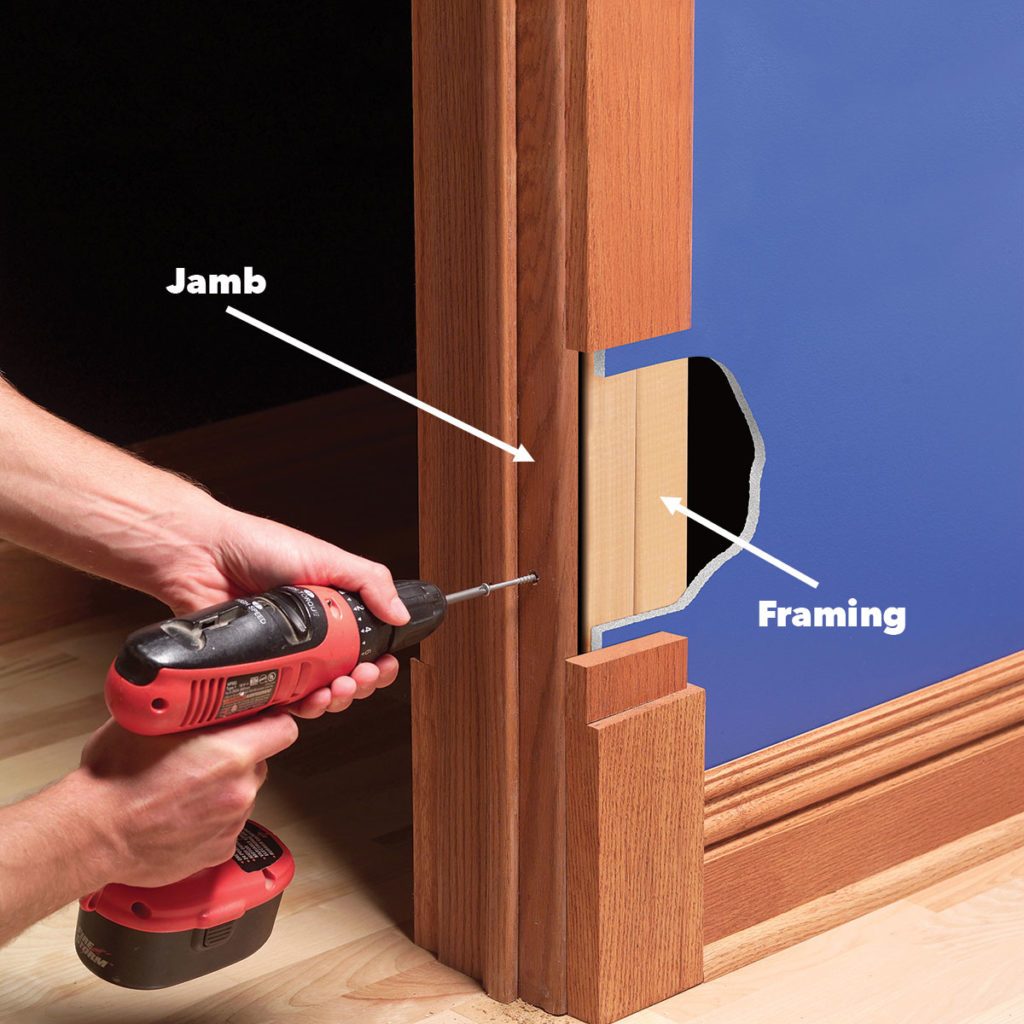
This is actually just some other version of the hinge adjustment described above. By driving a long screw through the "latch" side of the jamb (rather than the hinge side), you lot can ofttimes describe in the jamb and give the door a lilliputian extra infinite. Try this only if drawing in the hinges doesn't work; information technology leaves you with a large screwhead pigsty to cover.
Drill Through the Jamb
- Countersink the screwhead with a countersink bit.
- Drive a screw well-nigh the middle of the surface area where the door is rubbing.
- Pro tip: You may need to add a second screw.
- Tighten screws gradually and watch the trim to make sure you don't open joints.
- Encompass the screwheads with forest filler so sand and paint or stain the filler to match.
Step four
Fix #3: Plane the Door With a Chugalug Sander
If your door nonetheless sticks after you've tried tightening and driving screws, you'll have to remove the door and aeroplane it.
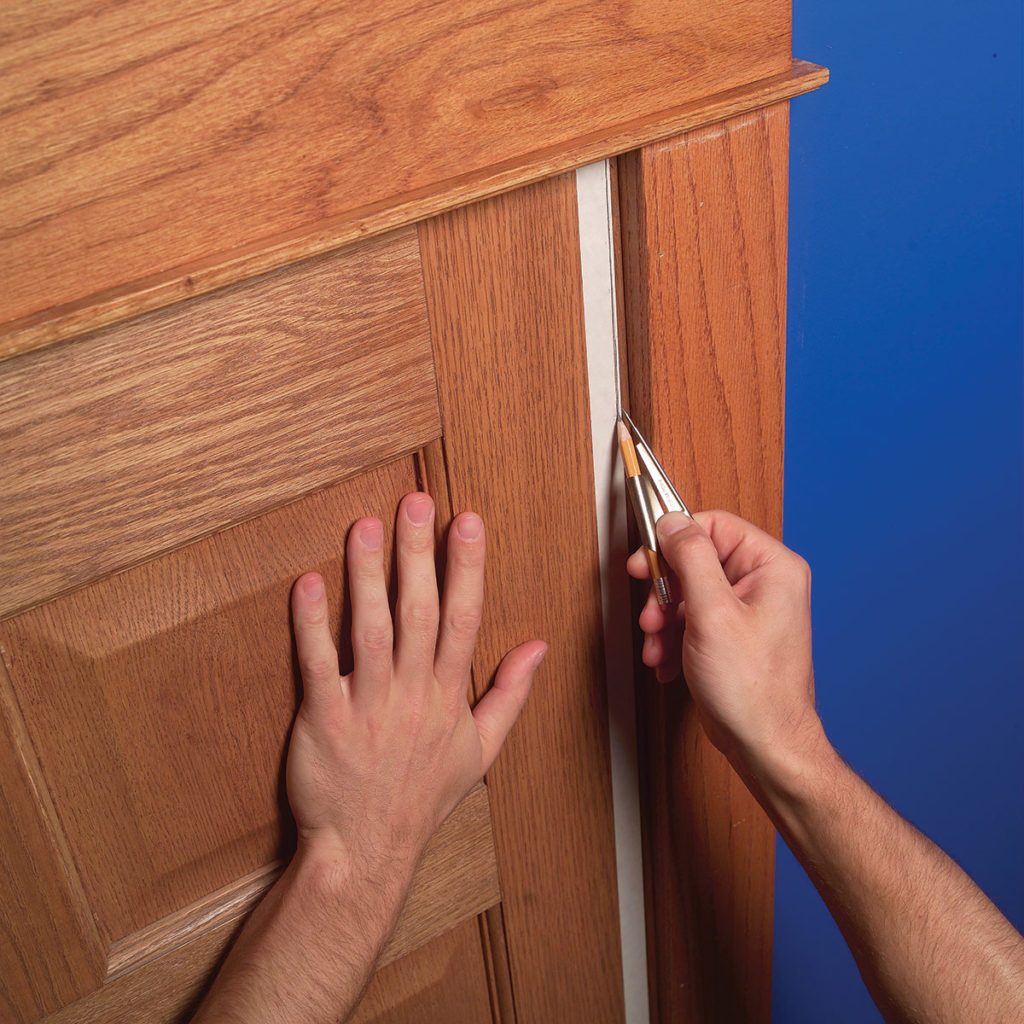
Apply a Compass
- Scribe the door.
- Gear up the pencil tip and compass point 1/8 in. apart and run the point along the jamb.
- Pro tip: Masking record makes the pencil line piece of cake to see.
Step 5
Sand to Your Mark
Remove the excess wood with a belt sander. Sand right up to the line, but not into information technology.

Step half dozen
Check Your Progress
- Cease sanding occasionally to make sure that yous're sanding squarely and not creating a beveled edge.
- Remove the excess wood with a belt sander. Sand right up to the line, merely non into it.

Stride 7
Seal the Edge
Stain or paint the sanded edge. When varnishing the edge, apply polyurethane with a lint-gratuitous rag rather than a castor to avoid slopping onto the door'south confront.

Originally Published: Dec 14, 2022

How To Repair A Double Door,
Source: https://www.familyhandyman.com/project/fix-sagging-or-sticking-doors/
Posted by: henrysuraceent.blogspot.com
0 Response to "How To Repair A Double Door"
Post a Comment